Do you need a Aerodynamics Professor performance review template but don’t where to start? Use our purpose-built performance review app to plan, conduct and track every stage of the review process in one place – from preparation and meeting notes to ratings, goals and follow-ups. Built around best-practice review workflows, it helps you stay organised, save time and make sure nothing gets missed when conducting a performance review for your Aerodynamics Professor.

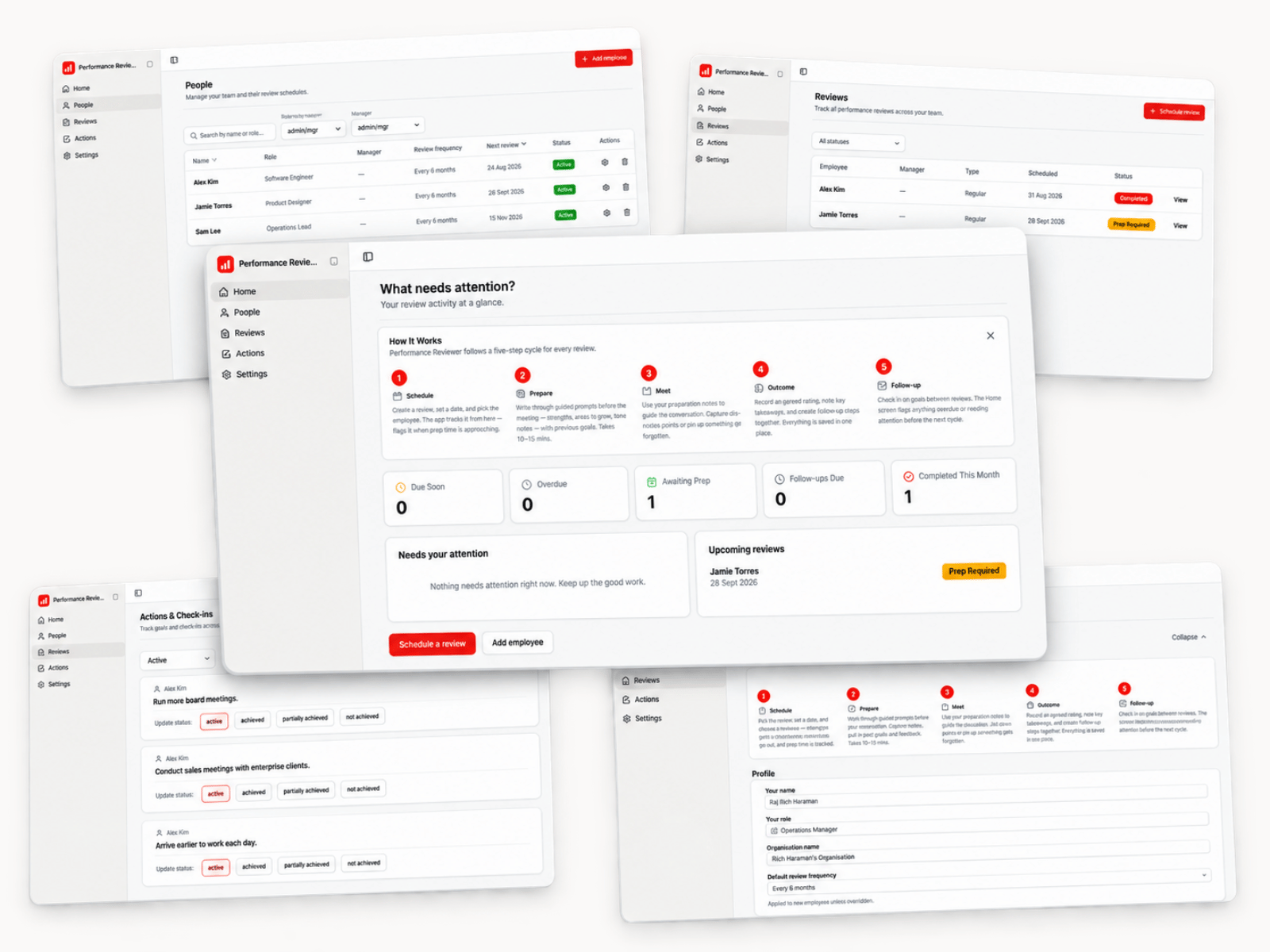
Aerodynamics Professor Performance Review Template
Aerodynamics Professor Performance Review Example
Are you looking for help setting up a performance review checklist so that when you have your HR review meeting with your Aerodynamics Professor, you can ensure you’re covering all the best practice areas? In the outline below, we give an outline of each section of the performance review template with tips, including employee information, performance summary, KPAs for your Aerodynamics Professor, goal achievement, strengths and accomplishments, areas for improvement, performance review comments, a development plan and more.
Employee Information
Basic details such as name, job title (Aerodynamics Professor), department, review period, and reviewer’s name. This sets the context and ensures accurate documentation.
Performance Summary
In the Performance Summary section for an Aerodynamics Professor, the review should encapsulate the professor’s effectiveness in delivering complex aerodynamic concepts to students, highlighting their ability to engage and inspire through innovative teaching methods. It should reflect on their contributions to advancing the department’s academic reputation through research publications and conference presentations. The summary should also acknowledge their role in mentoring students and fostering a collaborative learning environment. Additionally, it should consider their involvement in curriculum development and any leadership roles undertaken within the department. Overall, the summary should provide a balanced view of the professor’s impact on both student success and the academic community, while identifying areas for further professional growth.
Key Performance Areas (KPAs)
In a performance review for an Aerodynamics Professor, the Key Performance Areas should encompass several critical aspects. Technical Skills are paramount, assessing the professor’s expertise in aerodynamics and their ability to convey complex concepts effectively to students. Productivity and Efficiency should evaluate their ability to manage time effectively, balancing teaching, research, and administrative duties. Collaboration and Communication are essential, focusing on their ability to work with colleagues, contribute to departmental goals, and engage with students. Quality of Work should assess the rigor and impact of their research, as well as the effectiveness of their teaching methods. These KPAs ensure a comprehensive evaluation, aligning the professor’s performance with the educational institution’s standards and expectations, while also providing constructive feedback for professional growth.
Goal Achievement
In the Goal Achievement section of a performance review for an Aerodynamics Professor, it is important to assess the progress made toward previously established academic and research goals. This includes evaluating the effectiveness of their teaching methods, the development and delivery of course materials, and their ability to engage and inspire students. Additionally, the review should consider the professor’s contributions to research, including publications, conference presentations, and collaboration with peers. It is also essential to examine their involvement in departmental activities and mentorship of students. Identifying areas where the professor excels and where they may need additional support or resources can help enhance their effectiveness and align their efforts with institutional objectives. This evaluation provides a comprehensive understanding of the professor’s ability to meet expectations and contribute to the academic community.
Strengths and Accomplishments
In the Strengths and Accomplishments section of a performance review for an Aerodynamics Professor, it is essential to highlight their expertise in complex aerodynamic principles and their ability to effectively communicate these concepts to students. Recognize their innovative teaching methods that enhance student engagement and understanding, as well as their contributions to curriculum development that keep the program at the forefront of the field. Acknowledge their research achievements, including published papers and conference presentations, which contribute to the academic community and elevate the institution’s reputation. Additionally, emphasize their mentorship of students and junior faculty, fostering a collaborative and supportive learning environment. Highlight any awards or recognitions received, as well as successful grant applications that have secured funding for research projects. These accomplishments not only validate their contributions but also inspire continued excellence in their academic and professional endeavors.
Areas for Improvement
In the Areas for Improvement section of a performance review for an Aerodynamics Professor, it is important to focus on enhancing both teaching effectiveness and research contributions. Constructive feedback might address the need for more engaging and interactive teaching methods to better captivate students and facilitate deeper understanding of complex aerodynamic concepts. Additionally, the professor could benefit from expanding their research portfolio by collaborating with industry partners or pursuing interdisciplinary projects, which could enhance their academic impact and professional growth. Encouraging the professor to seek feedback from peers and students can also provide valuable insights for refining their teaching and research approaches. By focusing on these areas, the professor can continue to develop their skills and contribute more effectively to their department and the broader academic community.
Development Plan and Goals for the Next Period
In the Development Plan and Goals for the Next Period section of a performance review for an Aerodynamics Professor, it is essential to outline objectives that foster both personal growth and alignment with institutional goals. This could involve pursuing advanced certifications in aerodynamics or related fields to enhance subject matter expertise. Engaging in professional development through workshops or conferences can also be beneficial. Additionally, setting SMART goals such as publishing a research paper in a peer-reviewed journal within the next year or developing a new course module by the upcoming semester can drive academic contributions. Mentorship opportunities, either as a mentor or mentee, can further enrich professional development. These steps should aim to elevate teaching effectiveness, contribute to the academic community, and support the university’s mission of excellence in education and research.
Rating Scale
A rating scale (e.g., 1-5 or “Needs Improvement” to “Exceeds Expectations”) standardizes feedback and makes performance levels more understandable.
Employee Comments
A space for your Aerodynamics Professor employee to share their thoughts, feedback, or concerns about their review. This encourages dialogue and helps employees feel engaged in the process.
Signatures and Date
Signatures from both the Aerodynamics Professor employee and reviewer indicate that the review was discussed and agreed upon, making it official and fostering accountability.
Building your Aerodynamics Professor Performance Review template
From reading through the items in the example Aerodynamics Professor checklist template above, you’ll now have an idea of how you can apply best practices to running Aerodynamics Professor performance review meetings. Need help getting started? Scroll up to get a template that will save you hours of time.


Updating…